
Sudden changes to your hearing should be treated as a medical emergency, not ‘wait and see’
While most clients who visit our clinic have experienced gradual hearing loss, we sometimes see clients who have experienced a sudden change in their hearing. Many of these clients have held off on having a hearing check - sometimes for days, weeks or even months, as their instinct has been to wait a few days to see if it clears up on its own. At Hobart Hearing Care, our advice is: don't wait. If you notice a sudden change in your hearing, get it checked as soon as possible. Here's why.
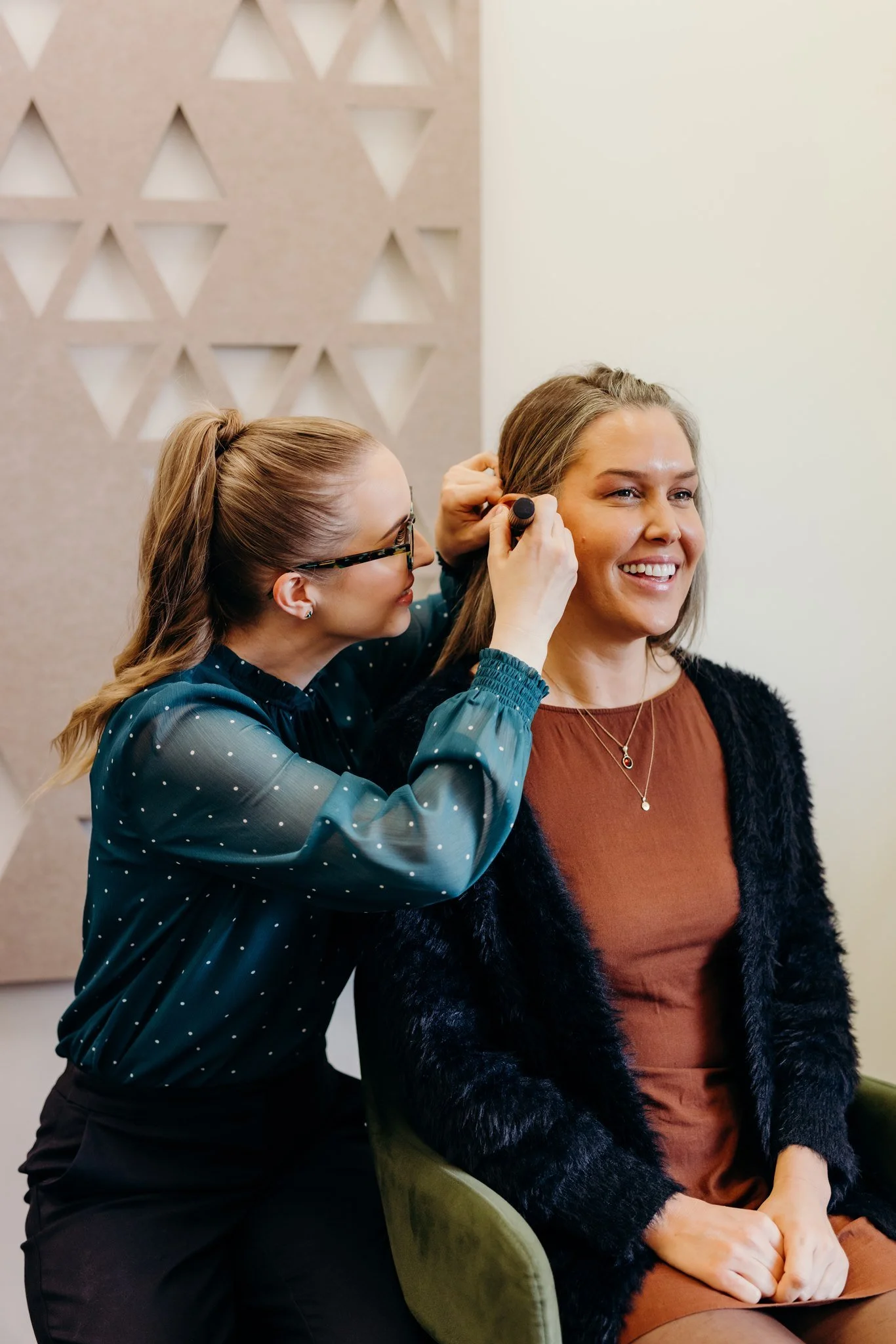
We always recommend having sudden changes to your hearing checked out immediately
Yes, it's often something simple
Happily, most cases of sudden hearing loss turn out to have a straightforward explanation. Common culprits include:
Earwax build-up blocking the ear canal
A middle or outer ear infection, which may be treated with antibiotics or anti-fungal drops
Fluid behind the eardrum, which can occasionally follow a cold or congestive illness
These are usually easy enough to diagnose and treat, and hearing typically returns to normal once the underlying issue is resolved.
But sometimes it's something more urgent
In a small number of cases, however, sudden hearing loss isn't caused by a blockage or infection. It's caused by a sudden problem with the inner ear; i.e. the hearing organ (known as the cochlea) or the hearing nerve itself. This is known as sudden sensorineural hearing loss (SSNHL). As well as sudden hearing loss, individuals with SSNHL may experience additional symptoms such as tinnitus, dizziness, or vertigo.
SSNHL is defined as a noticeable drop in hearing that develops over less than 72 hours. It's uncommon, affecting somewhere between 5 and 20 people per 100,000 each year, and in most cases doctors are not able to identify an exact cause. But despite being rare, it's considered an ear health emergency, because how quickly it's treated impacts the chances of recovery.
Why timing matters so much
Some people with SSNHL will recover some or all of their hearing without any treatment at all. Research suggests this happens spontaneously in roughly a third to two-thirds of cases. But prompt diagnosis and treatment can improve those odds.
The standard first-line treatment is a short course of oral corticosteroids (unless there's a medical reason a person can't take them), and this works best the sooner it's started after symptoms begin; ideally within the first 48 hours. Hyperbaric oxygen therapy is another form of treatment that has been associated with improved prognosis, especially for moderate to severe degrees of SSNHL and when treated as soon as possible after the onset of symptoms.
Treatment can still help if started within about two weeks of the hearing change, but the chances of a good recovery drop off significantly after that point. Hearing loss that hasn't improved within 14 days is more likely to become permanent. In other words: the difference between getting checked today versus in two weeks could be the difference between recovering your hearing and a permanent hearing loss.
How we tell the difference
The only reliable way to distinguish a simple blockage from something more serious is a hearing assessment. At Hobart Hearing Care, this starts with a look inside the ear canal (otoscopy) to check for obvious causes like earwax or infection. If nothing obvious is found, a comprehensive hearing test can determine whether the hearing loss is conductive (from the outer or middle ear) or sensorineural (from the inner ear or hearing nerve), to help guide what happens next. The test is performed using two different types of headphones, air-conduction headphones and bone-conduction headphones, and the results of these are compared.
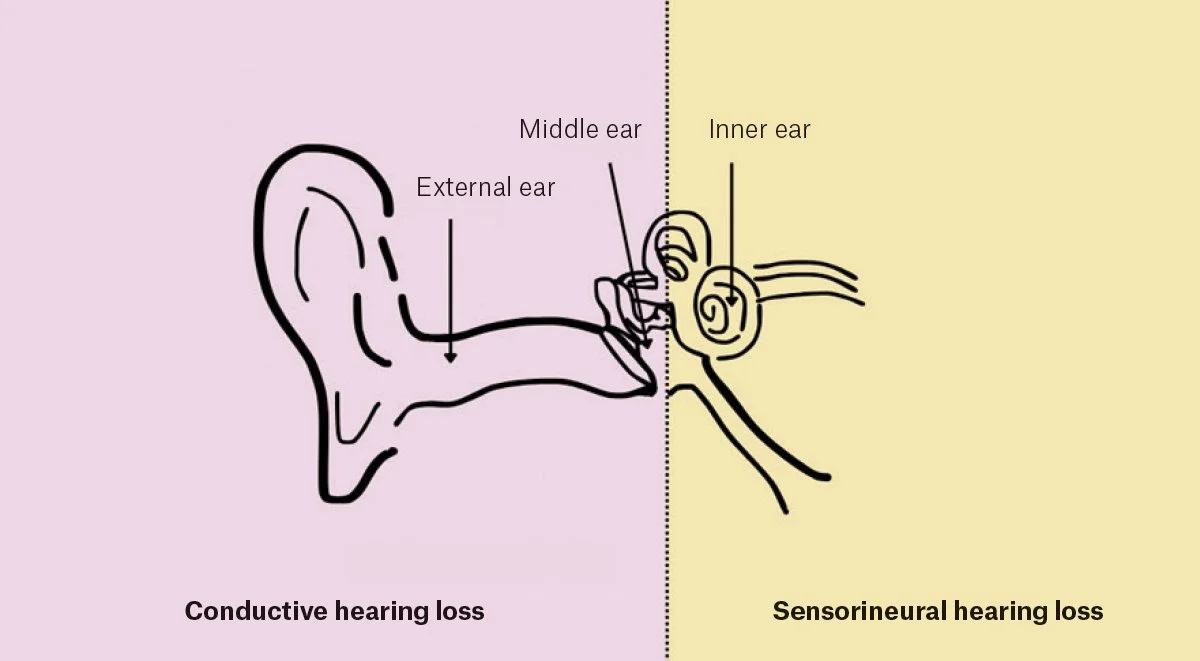
A conductive hearing loss affects the pink shaded region (outer or middle ear) while a sensorineural hearing loss affects the yellow shaded region (inner ear)
What we do about it
Because timing is so critical with SSNHL, we prioritise appointments for anyone presenting with a sudden change in hearing at Hobart Hearing Care. If you contact us with these symptoms, we'll do our best to see you urgently, on the same day where possible.
If our assessment suggests your hearing loss may be sensorineural, we'll write a report straight after your appointment so you have everything you need to see your GP, urgent care clinic or emergency department, without delay. Fast access to medical treatment gives you the best possible chance of a good outcome.
The key message
A sudden change in hearing is always worth getting checked; even if it turns out to be nothing more than a bit of excess wax. Most of the time, that's exactly what it will be, but because a small number of cases are time-critical, it's never worth the risk of waiting to see if it goes away on its own. If you've noticed a sudden change in your hearing, contact Hobart Hearing Care today. We'll make space to see you urgently and help you get the right care as quickly as possible.

We will always prioritise an appointment for sudden changes to hearing at Hobart Hearing Care
This article is general information and is not a substitute for individual medical advice. If you are experiencing sudden hearing loss, please seek assessment promptly.
References:
1. Chen, I., Shalom Eligal, Ori Menahem, Salem, R., Sichel, J., Perez, R., & Shaul, C. (2023). Time from sudden sensory neural hearing loss to treatment as a prognostic factor. Frontiers in Neurology, 14. https://doi.org/10.3389/fneur.2023.1158955
2. Foden, N., Mehta, N., & Joseph, T. (2013). Sudden onset hearing loss--causes, investigations and management. Australian Family Physician, 42(9), 641–644.
3. Foden, N., & Soon, S. (2025). Onset of sudden sensorineural hearing loss: An update. Australian Journal of General Practice, 54(7), 432–436. https://doi.org/10.31128/ajgp-04-24-7239
4. Kepler, T., Flanagan, S., & Hoegerl, C. (2023). Urgency in the Treatment of Sudden Sensorineural Hearing Loss . Cureus, 15(6). https://doi.org/10.7759/cureus.40409
5. National Institute on Deafness and Other Communication Disorders. (2018, September 18). Sudden Deafness. NIDCD. https://www.nidcd.nih.gov/health/sudden-deafness
6. Murphy-Lavoie, H. M., & Mutluoglu, M. (2023). Hyperbaric treatment of sensorineural hearing loss. StatPearls Publishing. https://www.ncbi.nlm.nih.gov/books/NBK459160/