
Choosing the Right Hearing Aid Style – Part 2
Last week’s article (which can be found here) discussed the pros and cons of behind-the-ear style hearing aids. To re-cap: behind-the-ear hearing aids have the benefits of robustness, having fewer issues with your own voice sounding loud or unnatural, including more features such as Bluetooth and higher performance in background noise, and being discrete, especially for wearers with long hair. Behind-the-ear hearing aids do have some drawbacks, however, such as being more likely to catch on items such as glasses and be inadvertently flicked off, more prone to picking up wind noise, and potentially more fiddly to insert for those who may have dexterity issues. This article will cover the pros and cons of in-the-ear style hearing aids, that should be considered when choosing your hearing aid style.
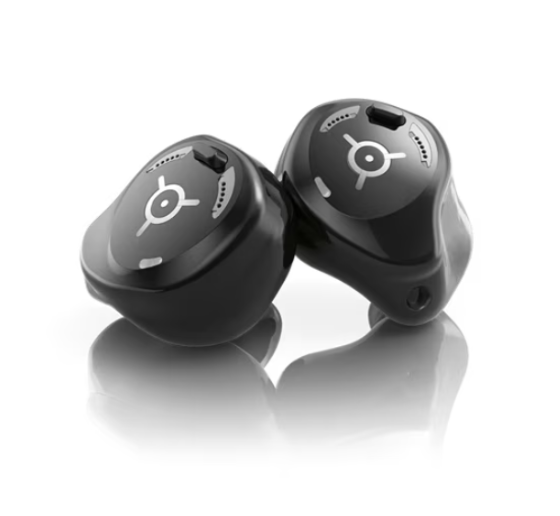
Phonak Infinio Virto ITC Hearing Aids - an example of in-the-ear hearing aids
In-the-ear style
‘In-the-ear’ style hearing aids are positioned entirely within the ear, with no components sitting behind the ear. In-the-ear hearing aids can be categorised into two further styles: ‘instant fit’ and ‘custom’ hearing aids. Instant fit hearing aids are ready-to-wear devices that are usually reasonably small, have a silicone dome or sleeve covering the receiver (where the sound comes out) and slip directly into the ear canal. Custom hearing aids on the other hand, are manufactured according to the exact anatomy of the wearer. To be fitted with custom hearing aids, the audiologist takes an impression (casting) of your ear canal shape, which is provided to the hearing aid manufacturers. The manufacturers then build the electronic components of the hearing aid into a bespoke shell that will fit your ear perfectly. Custom hearing aids come in different sizes. Listed from largest to smallest, these include: ITE (in-the-ear), ITC (in-the-canal), HS (half shell), CIC (completely-in-canal), and IIC (invisible-in-canal).
The advantages of an in-the-ear hearing aid style include:
Not having any component of the hearing aid sitting behind the ear. This makes the aid less likely to interfere with other items sitting on top of the ears such as glasses and masks, and can be helpful for people who wear full face helmets (e.g. for motorcycling or sports).
Less interference from wind noise due to the microphones being protected by the pinna (the visible outer flap of the ear)
Instant fit and smaller custom hearing aids such as CICs and IICs are extremely discrete
Larger custom hearing aids are easier to insert and manage, particularly those with rechargeable batteries, which can be helpful for people with manual dexterity issues (e.g. arthritis or poor sensitivity in the fingers)
The disadvantages of an in-the-ear hearing aid style include:
Being more likely to breakdown, as the ear canal is a hostile environment for electronics due to wax and moisture build up
Your own voice and internal sounds such as chewing or swallowing may sound louder or more distorted, as the ear canal must be filled up by the hearing aid in order for it to remain in the ear. This is known as the ‘occlusion effect’ (you can mimic this sensation by blocking your ears with your fingers and speaking – you will notice how your own voice sounds louder). This is more problematic for people who have only mild or no hearing loss in the lower pitches.
Custom hearing aids may need to be re-shelled if your ear canal changes shape, causing the hearing aid to become too tight, too loose or uncomfortable. This involves having a new set of impressions taken and sending the hearing aid(s) away to be re-shelled, which can take approximately 3 weeks.
If your hearing aids are being re-shelled or repaired, you may have to go without any aids for the time they are away, which can be challenging if you have a greater degree of hearing loss. Loaner hearing aids are generally available in a behind-the-ear style only; this style may be set up for you to borrow during the interim, but will involve an appointment to set them up, as the settings cannot be easily transferred from one style of hearing aid to another.
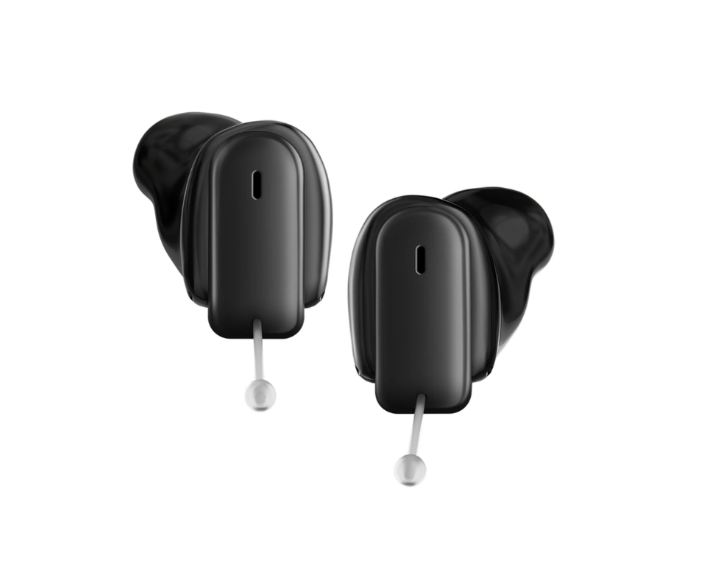
Signia Insio Charge&Go IXCIC is - an example of a completely-in-canal (CIC) hearing aid
The disadvantages of CICs, IICs and instant fit hearing aids
While these hearing aids are often appealing due to their tiny size and discreteness in the ear, there are some additional disadvantages that apply to the smaller custom aids (CICs and IICs) and instant fit hearing aids.
These models often sacrifice certain features due to their small size; this may mean missing out on Bluetooth, telecoils (for connecting to electromagnetic hearing loops), buttons to control volume/program or rechargeability
Instant fit and/or smaller custom models also have less space between the two microphones, or only a single microphone; this may mean that features to reduce background noise are less effective compared with an equivalent behind-the-ear model
The smaller the hearing aid, the more difficult they are to manage (i.e. insert, remove, change the battery, etc.), unless you have good finger dexterity
Some people find instant fit hearing aids uncomfortable, especially those with smaller or curved ear canals, as they are ‘one-size-fits-most’ designs and not ‘made-to-measure’. It is always a good idea to try one in the ear to ensure it will fit comfortably before ordering this style
Those with small or curved ear canal anatomies may not be suitable for small custom hearing aids such as CICs or IICs, as there may not be enough space within the shell to fit all of the components; the manufacturers may recommend a larger style such as an ITC or ITE in these cases
Many brands do not make their latest technology platforms available in small custom or instant fit styles; therefore, depending on which brand of hearing aid is chosen, you may be getting older technology with this style.

So what’s the best option for me?
Choosing a hearing aid style is a big decision, and there is no ‘perfect’ option, as both behind-the-ear and in-the-ear styles have their pros and cons. It’s important to discuss your preferences, goals and needs with your audiologist. At Hobart Hearing Care, we work carefully with you to provide advice on the best style for you based on these considerations, in conjunction with your degree and type of hearing loss and the anatomy of your ears. Get in touch with us today to make an appointment for a hearing aid discussion, where we can help you explore the options.