
Hearing Assessment
Whether you have concerns about your hearing, experience bothersome tinnitus, or a hearing test has been recommended by your GP, this appointment is for you.
Fee $188 - up to 75 minutes with an audiologist
No GP referral needed (though GP referral may attract a Medicare rebate)
Pension and DVA card holders may be eligible for fully-funded hearing assessments (conditions apply under the Australian Government Hearing Services Program)
Our Hearing Assessment Process
First, we have a discussion about your hearing experience and take a comprehensive history from you. This can help us understand what we might anticipate with your results, whether you may be at risk of certain ear or hearing conditions and how you might manage hearing devices should they be recommended.
Next, we examine your ear canals using an otoscope (small torch) to check the condition of your outer ear, before moving onto testing. We will often use a video otoscope, which means you will be able to see the image on the computer screen, and your audiologist can show you what your ear canals and eardrums look like.
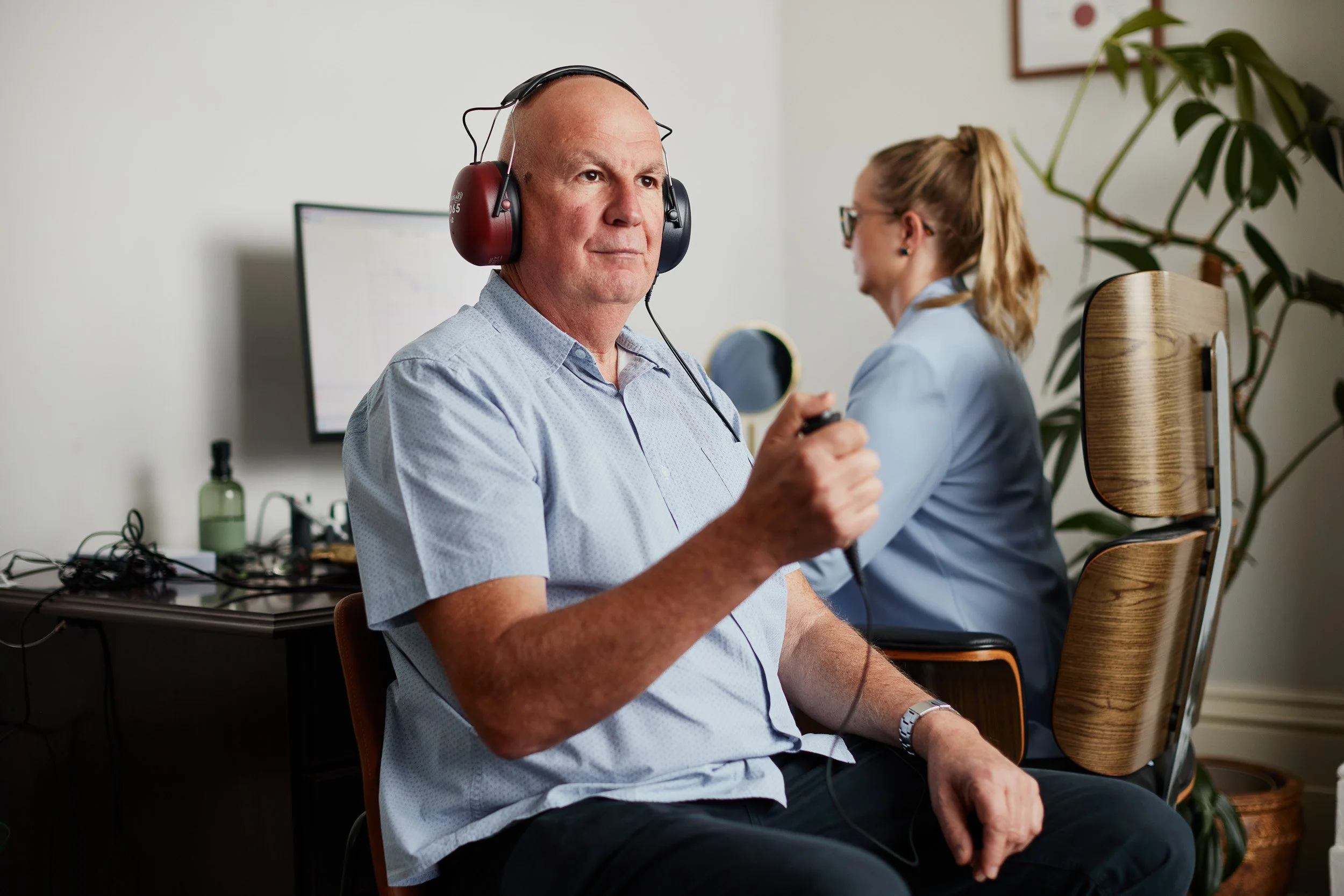
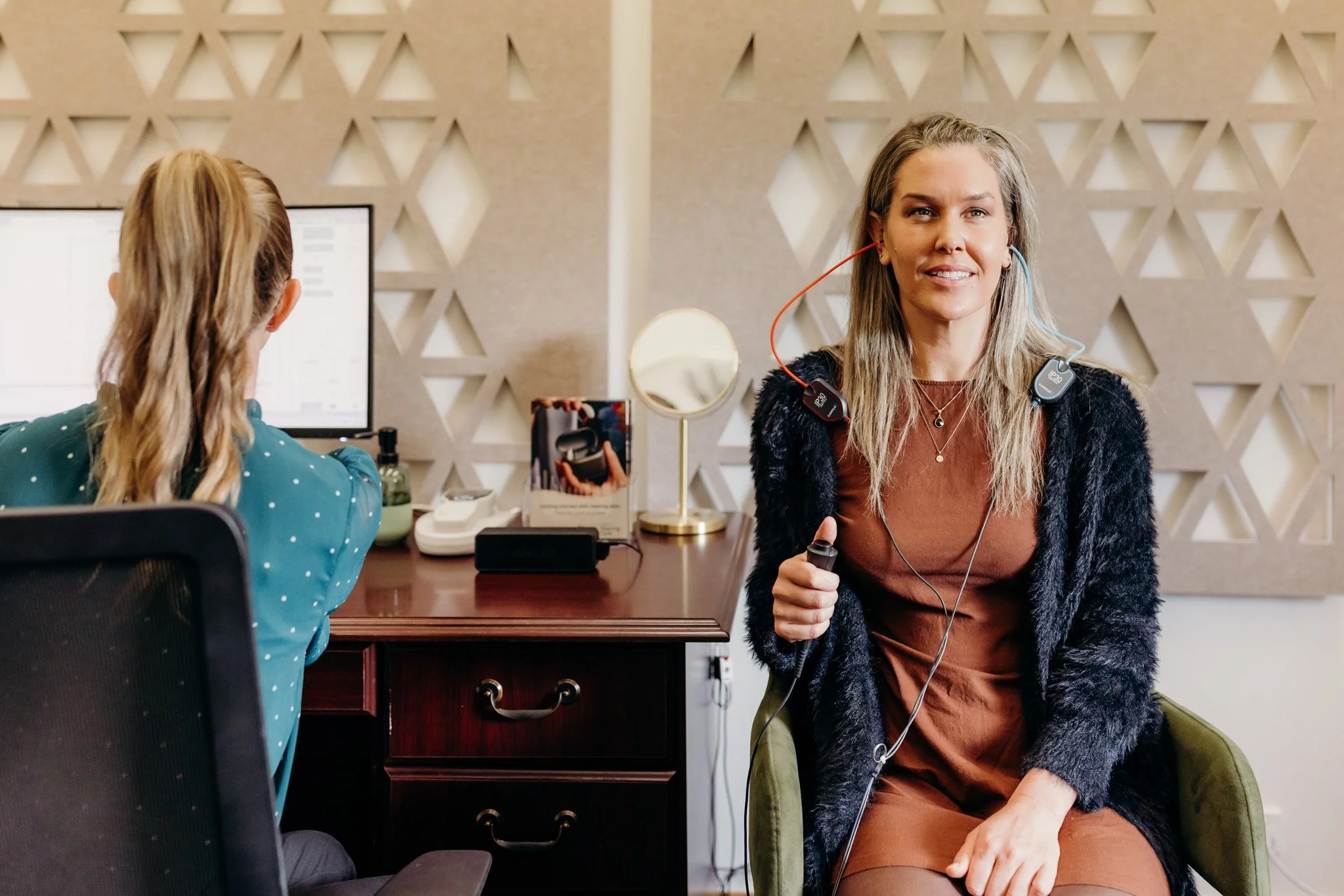
The hearing test aims to determine the softest possible sounds you can hear by playing different pitches through a pair of headphones. You will be asked to press a button every time you hear one of these beeps. Both ears will be assessed individually. We will also complete a speech test, which involves repeating words that you hear through the headphones. These tests are performed in a sound-treated booth, which helps you focus by eliminating some of the surrounding noise. The booth has two windows, so you can see out; however if you feel uncomfortable in small spaces, please let your audiologist know, and we can perform the testing outside of the booth (the results will still be accurate).
Sometimes we may perform additional testing called tympanometry if it is deemed appropriate. This test involves having a small, silicone tip placed in your ear, and you will feel a pressure change for a few seconds (much like going up a mountain or ascending on an aeroplane). This gives us an indication of the health of the middle ears (the space behind the eardrums).
Finally, we will have a discussion about the results, and what the next step may be, such as sending a copy of your results to your GP, planning another assessment of your hearing in the following year(s), or fitting a set of hearing devices for you. If you have tinnitus, we can also discuss management strategies for this.
Do I Need a Hearing Test?
If you fall into any of the following categories, you should consider a hearing assessment:
Trouble hearing conversations
Family history of hearing loss
Exposure to loud environments
Ringing or buzzing in the ears
Difficulty hearing certain sounds or words
Sudden hearing changes
Frequent ear infections
Frequently Asked Hearing Assessment Questions
-
A hearing assessment typically involves a series of tests to evaluate your hearing abilities and health of your outer, middle and inner ears. An audiologist will review your hearing health history and perform a full hearing test, including checking your ability to hear different pitches and speech sounds. Once we review your results, a plan is put in place to help you keep your ears healthy and to treat hearing loss if necessary.
-
You can easily book a hearing test at our Macquarie Street clinic by booking online through our website here, or giving us a call on (03) 6292 5607. A team member can assist you in setting up an appointment that suits your schedule.
-
Unless you are eligible for the Hearing Services Program (which means you hold a Pensioner Concession Card or DVA gold card/white card with ‘hearing’ specified), we do not offer a free comprehensive hearing assessment. Our clinic focuses on quality and detailed hearing assessments, so we do not typically offer ‘free’ services.
-
A typical comprehensive hearing assessment takes up to 75 minutes, depending on the number of tests performed and how much discussion follows. If you have hearing loss or medical issues which need to be addressed, we like to allow plenty of time to discuss this with you following testing, so that we can answer any questions you may have.
-
Of course! At Hobart Hearing Care, we value the input of family members, carers and significant others. You are always welcome to bring someone along to your appointment with you. If you anticipate you will need to talk about hearing devices, we find it can be very helpful having someone else to discuss this with, as there are often some big decisions to make.
-
If you have trouble hearing conversations, understanding speech in noisy environments, or have concerns about your hearing health, it's recommended to have your hearing tested. Book a hearing assessment at our Macquarie Street clinic to assess any potential hearing loss.
-
Yes, Hobart Hearing Care provides services for helping you choose the right hearing technology for you, fitting hearing devices and accessories, and maintaining/reviewing the performance of those hearing devices over time. Following your hearing test results, we can discuss whether hearing aids are a suitable option for you. Our clinic offers a range of hearing devices to meet your needs, and we provide guidance on choosing the right hearing aids based on your test results, lifestyle and preferences.
-
You do not need a doctor's referral to book a hearing assessment at our clinic. However, if you are seeking a Medicare rebate on your hearing assessment, a referral is required. If you have a referral from your doctor, please bring along your Medicare card and a savings/debit card, so that we can process your rebate. Please give us a call on (03) 6292 5607 if you have any questions regarding eligibility for a Medicare rebate.
-
If this is your first appointment with Hobart Hearing Care, before your hearing assessment you may wish to gather previous test results to bring along to your appointment. If we can see your previous results, we are then able to advise you on whether there have been any changes since your last hearing assessment. Also, if you know or suspect you have a significant build-up of earwax, it is best to have this removed before your hearing assessment. Hobart Hearing Care also offers earwax removal services; click here to find out more!